WhatsApp Status or Instagram Stories for Local Business Offers?6 min read
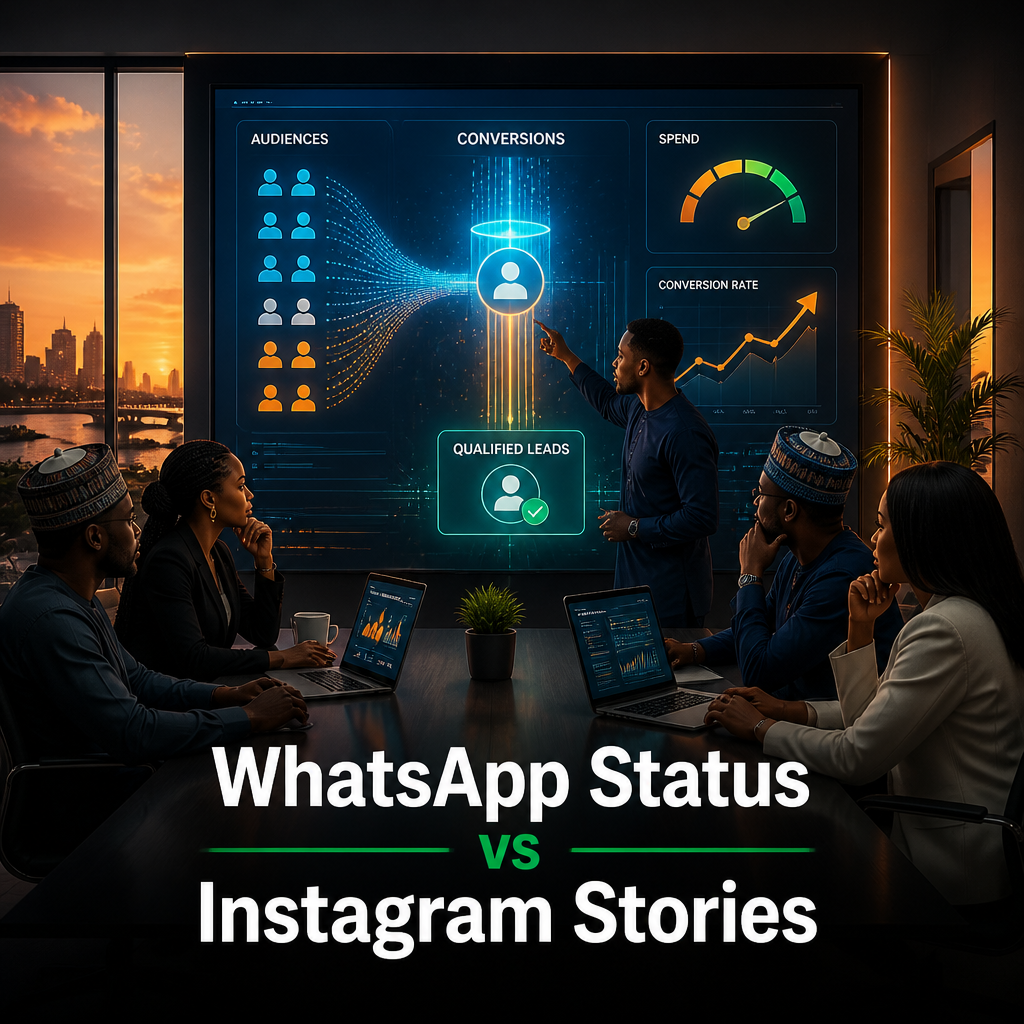
A Nigerian customer may see your offer between a family WhatsApp update and an Instagram Reel, then decide within seconds whether to buy. That is why choosing between WhatsApp Status vs Instagram Stories is not just a question of which platform looks better. It is about reaching the right people and making the next step easy.
For a neighbourhood salon in Enugu, that step might be booking a slot. Meanwhile, a fashion seller in Lagos might want customers to view a new collection and send a DM. The best channel depends on your audience, offer and ability to track what happens after people see it.
Albanny Technologies helps businesses connect social content with measurable marketing goals. In this guide, you will learn how WhatsApp Status and Instagram Stories differ, which creative formats suit local offers, and how to track responses before choosing where to promote.
WhatsApp Status vs Instagram Stories: Which Audience Fits?
WhatsApp Status usually suits businesses that already have customer or prospect numbers. For example, a barber in Ibadan can share a same-day appointment opening with people who have saved the shop’s number. Because viewers may recognise the business owner, the offer can feel personal and familiar.
Instagram Stories, in contrast, can reach followers who discovered a business through its profile, posts or local recommendations. A Port Harcourt restaurant might show its lunch special to existing followers and encourage them to share the Story with friends. However, that reach depends on the account’s audience and engagement. A strong-looking Story does not guarantee that nearby customers will see it.
Therefore, start with the people you already want to reach. If your customers regularly message you on WhatsApp, Status may bring quicker enquiries. If your business relies on visual discovery, Instagram can help display products and build familiarity. A bridal makeup artist, for instance, can show a finished look on Instagram, then share a booking reminder with interested clients on WhatsApp.
Also consider customer permission and expectations. A person who has saved your number may welcome useful updates, but frequent irrelevant posts can lead them to mute your Status. Similarly, Instagram followers may enjoy product ideas but ignore repeated price cards. In short, choose the channel where your audience expects to hear from you.
For a broader plan that connects channels to campaign goals, use our guide to social media campaigns. It can help you think beyond posting and set a clear purpose for each promotion.
Match the Creative Format to the Offer
Both platforms use short-lived vertical content, so your offer needs to make sense at a glance. However, the best execution differs. WhatsApp Status works well for straightforward updates, such as “Friday walk-in slots available” or “Order before 2 p.m. for delivery today.” Add a clear price, deadline and reply instruction.
Instagram Stories can support a more visual sequence. For example, a skincare seller can show a product, demonstrate how to use it, and finish with an offer. Likewise, a caterer can show meal preparation, display the available menu and direct viewers to send a DM. These frames build context before the customer sees the call to action.
In both cases, use readable text and strong contrast. Many customers view Stories on small screens while commuting or taking a break. Therefore, keep the main benefit near the centre and avoid tiny price details. If the promotion depends on a location, name the area clearly, such as “Gwarinpa pickup” or “delivery within Surulere.”
Next, make the response action specific. “Reply ‘MENU’ for today’s options” is easier to track than “Contact us.” For an Instagram Story, you can invite a DM or direct viewers to a suitable link where available. Meanwhile, Status viewers can reply directly to your update. As Albanny Technologies’ campaign rule puts it, “Every offer needs one clear action and one way to measure it.”
Pro tip: Give each platform a slightly different code, such as STATUS10 and STORY10. As a result, you can ask customers which code they used and compare orders without expensive software.
Track Responses and Decide What to Repeat
Views do not tell the whole story. A local offer should produce a response you can count, such as a message, booking, store visit or completed sale. Before posting, decide what counts as success. For a restaurant, it could be ten lunch orders. For a salon, it might be five confirmed appointments.
Then record the basics in a notebook or spreadsheet: date, platform, offer, replies, enquiries and sales. For example, a Surulere shoe seller could post a WhatsApp Status with a unique code on Monday, then share a different code on Instagram Stories on Tuesday. When customers order, staff can note the code and total each channel’s sales.
However, avoid comparing channels based on views alone. Instagram may show reach and interactions, while WhatsApp may produce direct replies. Therefore, compare outcomes such as qualified enquiries, confirmed bookings and revenue. If Instagram earns more views but WhatsApp brings more purchases, the latter may be the better channel for that offer.
One caution: keep your tracking simple and respect customer privacy. Ask only for information you need to complete the sale. Also, do not add people to ongoing promotional messages without appropriate permission. For Nigerian telecom and internet context, consult the Nigerian Communications Commission. Finally, review results after each promotion and repeat the format that brings valuable customers, not just attention.
Key Takeaways
WhatsApp Status often suits businesses with existing customer relationships.
Instagram Stories can showcase visual products and attract follower engagement.
Keep offers brief, readable and focused on one clear action.
Use separate offer codes to compare responses from each platform.
Track enquiries and sales, not views alone, before repeating a campaign.
Promote Your Next Local Offer on the Right Channel
Choose the platform your customers already use, then give them a simple way to respond. Albanny Technologies can help you plan campaigns and improve how you convert social attention into enquiries through our digital marketing services.
Benson is a Senior Digital Strategist at Albanny Technologies with over 5 years of experience in high-end web development and technical SEO. Specializing in helping Nigerian businesses scale their digital footprint, he translates complex technology into actionable growth strategies. When he’s not auditing site performance, he’s mentoring the next generation of tech talent in West Africa