Why Your Facebook Page Gets Comments but Few Customer Enquiries6 min read
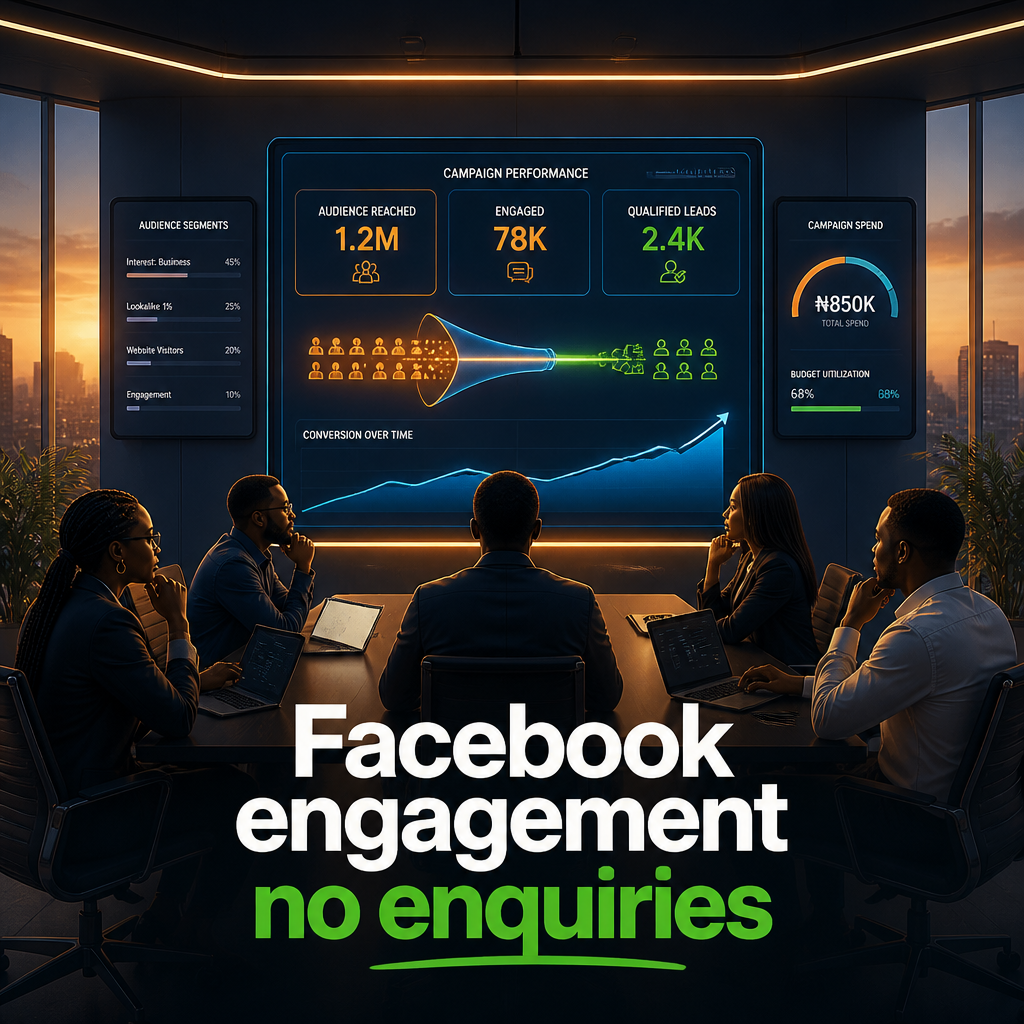
A Lagos fashion seller can receive dozens of comments on a new outfit post and still make no sales. That gap is frustrating, especially when Facebook engagement no enquiries keeps appearing in your monthly reports. However, comments and reactions show attention, not necessarily buying intent.
For example, people may enjoy a funny post, tag friends or ask about a colour without knowing how to order. Meanwhile, a serious customer may message once, receive no reply and buy from another seller. Albanny Technologies helps Nigerian businesses build clearer digital marketing and customer response paths. In this guide, you will learn how to diagnose weak offers, confusing enquiry routes and missed follow-ups.
Why Facebook engagement no enquiries starts with the offer
First, check whether your post gives people a clear reason to contact you. A post can attract attention without answering what you sell, who it suits, how much it costs or what customers should do next. As a result, followers react but do not take a buying step.
For instance, a Port Harcourt caterer might post photos of a birthday cake with the caption, “Weekend vibes!” The image may earn likes, but it does not say whether orders are open, which sizes are available or how to book. Instead, the caterer could explain the offer, list the starting price and invite customers to send their event date by WhatsApp.
Next, review your last ten promotional posts. Do they explain the product benefit in plain language? Do they show a price, starting price or useful way to request a quote? If every post says “DM for details,” customers may expect a slow exchange just to learn basic information. Therefore, add details that help them decide before they message.
Also, make your call to action specific. “Comment below” invites conversation, while “Send your location and preferred delivery date to get a quote” creates a clearer route. However, do not pressure every follower to buy immediately. Share helpful posts, customer stories and product demonstrations alongside direct offers.
A clear offer matters because different comments signal different needs. A “How much?” comment shows interest, but it does not confirm the person understands the product. Similarly, a laughing emoji may simply mean the post entertained someone. In short, assess enquiry quality, not engagement volume alone.
Fix the path from Facebook comment to customer enquiry
Next, test what happens after someone shows interest. Can visitors find your phone number, WhatsApp link, address or order form quickly? If they must search through old posts or guess what to do, many will leave. Therefore, check your page buttons, About section, pinned post and mobile display.
For a beauty brand in Lagos, one clear “Send WhatsApp Message” button may work better than several competing links. Meanwhile, a furniture maker may need a short enquiry form asking for item type, delivery area and preferred dimensions. Keep that form brief. Each extra field can discourage a customer who is browsing on mobile data.
Facebook’s own business guidance explains tools businesses can use to connect with customers. However, a button alone will not create a reliable sales process. Your team must check incoming messages, answer common questions and tell customers what happens next.
Pro tip: Ask a friend to open your page on a phone and request a price. Watch where they hesitate. Then remove confusing steps, broken links and unnecessary questions. In addition, test the route using a different Facebook account. Page owners may see buttons and settings that customers do not.
Track enquiries separately from public comments. For example, record the date, product, source, response time and outcome in a simple spreadsheet. As a result, you can compare posts that generated qualified conversations with posts that attracted casual reactions. You can also learn how to track WhatsApp leads from a Facebook campaign so campaign results do not disappear inside chat history.
Finally, make your instructions consistent. If the post says “Order through WhatsApp,” the page button should open the correct business number. Likewise, update old posts when prices, delivery zones or stock availability change. Otherwise, customers may encounter conflicting information and lose confidence before they enquire.
Respond faster and follow up without being pushy
Even a clear offer and easy message route can fail when nobody responds promptly. A customer who asks whether a dress comes in size 14 may message three sellers at once. Therefore, slow replies can cost the sale, particularly when the customer needs the item for an event.
Set a realistic response routine for your team. For instance, assign one person to check Facebook messages during business hours and another to cover evenings. If you cannot answer immediately, use an honest auto-reply. Tell customers when you will respond, and avoid promising instant service when no one monitors the inbox.
Then prepare short answers for repeated questions about price, delivery, payment and availability. However, keep replies personal. A useful response might say, “Good afternoon, Ada. The Ankara set costs ₦38,000, and delivery to Ikeja is available. Which size do you need?” That answer gives specific information and moves the conversation forward.
A fictional Abuja salon owner might describe the problem this way: “People asked about appointments, but I forgot to check messages after closing.” This example shows why follow-up needs an owner and a routine. If a customer asks for available dates, send the options, then follow up once if they go quiet. Do not send repeated messages that make them uncomfortable.
In addition, log promising conversations and set a reminder for the next step. A lead might need a quotation, a stock update or confirmation from a partner. Without a reminder, busy staff can forget. For teams handling many enquiries, Abby AI can capture leads and support WhatsApp conversations, helping businesses organise responses beyond manual checks.
As one practical measure, review response times and enquiry outcomes each week. If customers frequently ask the same question, improve the post or page information. If they stop replying after seeing the price, examine how you explain value, payment options and delivery. In short, treat every lost conversation as useful feedback.
Key Takeaways
First, comments and reactions do not prove that people intend to buy.
Next, make each offer clear, specific and easy to act on.
Then, test your page buttons, contact details and mobile enquiry route.
Also, track leads separately from likes, comments and shares.
Finally, assign response ownership and follow up politely.
Turn Social Engagement Into Better Enquiries
A busy Facebook page can support sales when your offer, enquiry path and follow-up work together. Albanny Technologies can help you strengthen that process through digital marketing services. Start by reviewing one recent post and fixing the biggest barrier between interest and contact.
Benson is a Senior Digital Strategist at Albanny Technologies with over 5 years of experience in high-end web development and technical SEO. Specializing in helping Nigerian businesses scale their digital footprint, he translates complex technology into actionable growth strategies. When he’s not auditing site performance, he’s mentoring the next generation of tech talent in West Africa