How to Nail Your Business Website’s First Impression With Nigerians6 min read
A Lagos customer may leave your website before your next bus stop if the page looks confusing, slow or untrustworthy. That first glance matters because Nigerian visitors often compare businesses quickly on their phones. A strong website first impression nigeria customers can trust helps them understand what you offer and decide what to do next.
However, good design is not just attractive colours or impressive animations. Your homepage should make your business feel credible, explain its value clearly and work well on mobile data. Albanny Technologies helps Nigerian businesses create websites that support those goals, rather than simply decorate a brand online.
In this guide, you will learn what visitors notice first, which homepage elements build trust and how to make practical improvements without redesigning everything.
What shapes a strong website first impression nigeria visitors trust
Visitors form quick opinions from the first screen they see. Therefore, your homepage should answer three questions immediately: What do you offer? Who do you serve? What should I do next?
For example, a Lagos laundry service could lead with, “Laundry pickup and delivery across Ikeja,” followed by a clear booking button. That tells visitors more than a vague slogan such as “We make life better.” Similarly, an Abuja accounting firm should state its key services and the kinds of businesses it supports.
Keep the main message close to the top. Use a short headline, one supporting sentence and one prominent action. Good buttons include “Book a consultation,” “Get a quote” or “Shop our collection.” Meanwhile, avoid putting several competing buttons in the first section. Too many choices can make people hesitate.
Visual credibility matters too. Use a clean layout, readable type and consistent colours. In addition, show real products, staff or work whenever possible. A fashion seller can use sharp product photos on a neutral background. A real estate agency can show actual properties and clearly label their locations. Generic stock photos may look polished, but they rarely prove that a local business is genuine.
Albanny Technologies’ design team puts it this way: “The first screen should tell visitors what you do and give them one clear next step.” That principle applies whether you are launching a new homepage or refreshing an existing one. For more practical trust signals, see web design tweaks that help Nigerian customers trust a business.
Make your homepage fast, mobile-friendly and locally relevant
Many customers discover businesses on phones, so design for the small screen first. Use a responsive layout, large tap-friendly buttons and text that visitors can read without zooming. Then test the page on an actual phone, not only a desktop preview.
Speed matters because heavy pages can frustrate visitors using mobile data or a weaker connection. Compress large images, remove unnecessary animation and limit features that slow the page. For example, a Port Harcourt caterer does not need a full-screen video before customers can see menus and prices. A lighter page can help visitors reach the information they need faster.
Also, make your contact details easy to find. Show a working phone number, business email and service area. If customers visit your premises, include the address and a map. Nigerian buyers often want to confirm that a business operates in their city before paying or booking. Clear delivery areas, payment methods and return policies can answer common concerns before they become objections.
Where you collect customer information, explain why you need it and protect it carefully. The Nigeria Data Protection Commission provides information on data protection and privacy responsibilities. Therefore, request only the details needed for an enquiry, booking or order.
Pro tip: Ask someone outside your business to complete a task on your phone homepage. For instance, can they find your price, service area and WhatsApp contact within one minute? If they struggle, simplify the page. You can also use mobile-readiness tests for Nigerian business websites to spot common issues.
Turn trust into a simple next step
A homepage should do more than make visitors feel welcome. It should guide them towards a useful action. Choose the action that matters most to your business, then repeat it naturally across the page. A restaurant might prioritise table reservations, while a building contractor may want visitors to request an estimate.
Trust grows when you support claims with proof. Add customer reviews, completed project examples, professional memberships or clear guarantees where relevant. However, keep testimonials specific and genuine. “They renovated our Surulere office on schedule” tells a stronger story than “Excellent service.” Ask permission before publishing a customer’s name, photo or business details.
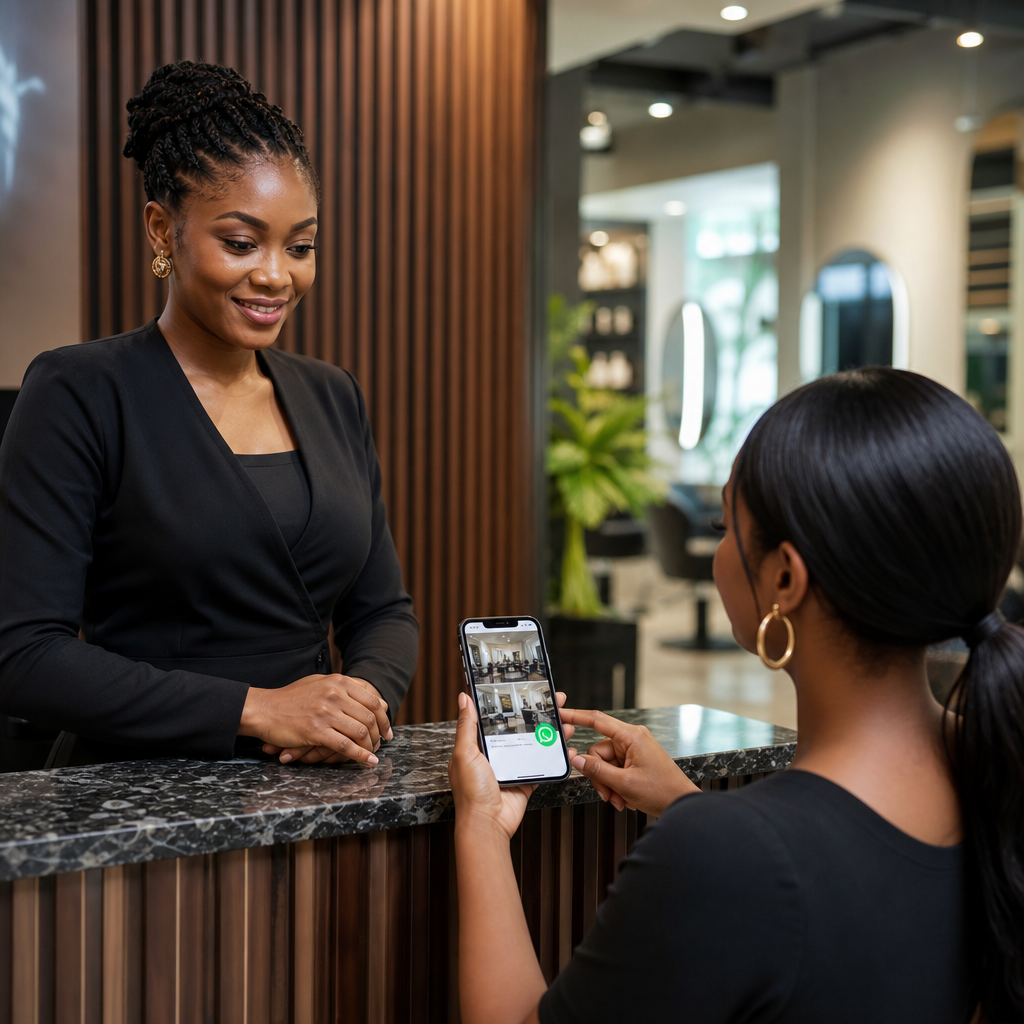
Next, reduce friction. If your customer wants to ask a question, make it easy to call or message you. A WhatsApp button can help visitors get quick answers, but it should lead to a monitored channel. For businesses handling frequent enquiries, Abby AI can respond on WhatsApp, capture leads, triage complaints and book appointments.
Meanwhile, check that every visible button works. Test forms, phone links, maps and checkout steps. A broken “Request a quote” button can undo the trust built by excellent photography. Also, show what happens after a visitor submits a form. A brief note such as “We will call you within one business day” sets a clear expectation.
Finally, review your homepage regularly. Update seasonal offers, remove expired announcements and replace outdated staff or product images. As your services change, make sure your headline, contact details and calls to action still reflect what you actually provide. If visitors can understand your offer, trust your proof and act without confusion, your first impression is doing its job.
Key Takeaways
State what you offer, who you serve and the next step near the top.
Use real, sharp images and keep your visual style consistent.
Design for phones, compress images and test page speed.
Show contact details, service areas and genuine customer proof.
Check every button, form and WhatsApp link regularly.
Upgrade Your Homepage With Conversion-Focused Design
A clear homepage can help visitors trust your business and take action with less hesitation. Albanny Technologies can help you plan and build a website that suits your customers and goals. Schedule a free consultation with a web design expert to discuss practical improvements for your homepage.
Benson is a Senior Digital Strategist at Albanny Technologies with over 5 years of experience in high-end web development and technical SEO. Specializing in helping Nigerian businesses scale their digital footprint, he translates complex technology into actionable growth strategies. When he’s not auditing site performance, he’s mentoring the next generation of tech talent in West Africa