Landing Page or Full Website: What’s Best for Nigerian SMEs in 2026?6 min read
Every naira counts for Nigerian SMEs in 2026. The digital landscape in Lagos, Port Harcourt, and beyond is fiercely competitive, and business owners must make smart choices about where to invest. One question keeps coming up: landing page vs website—which is truly best for growing a business in Nigeria? At Albanny Technologies, we’ve helped hundreds of SMEs navigate this decision. The wrong choice can waste precious funds, while the right one can boost leads, credibility, and growth.
In this article, you’ll learn the difference between a landing page and a full website, the pros and cons of each for Nigerian SMEs, and how to match your online presence to your business goals and budget. By the end, you’ll know which option will help you win in Nigeria’s digital marketplace—and how to get started.
Landing Page vs Website: Key Differences and Costs for Nigerian SMEs
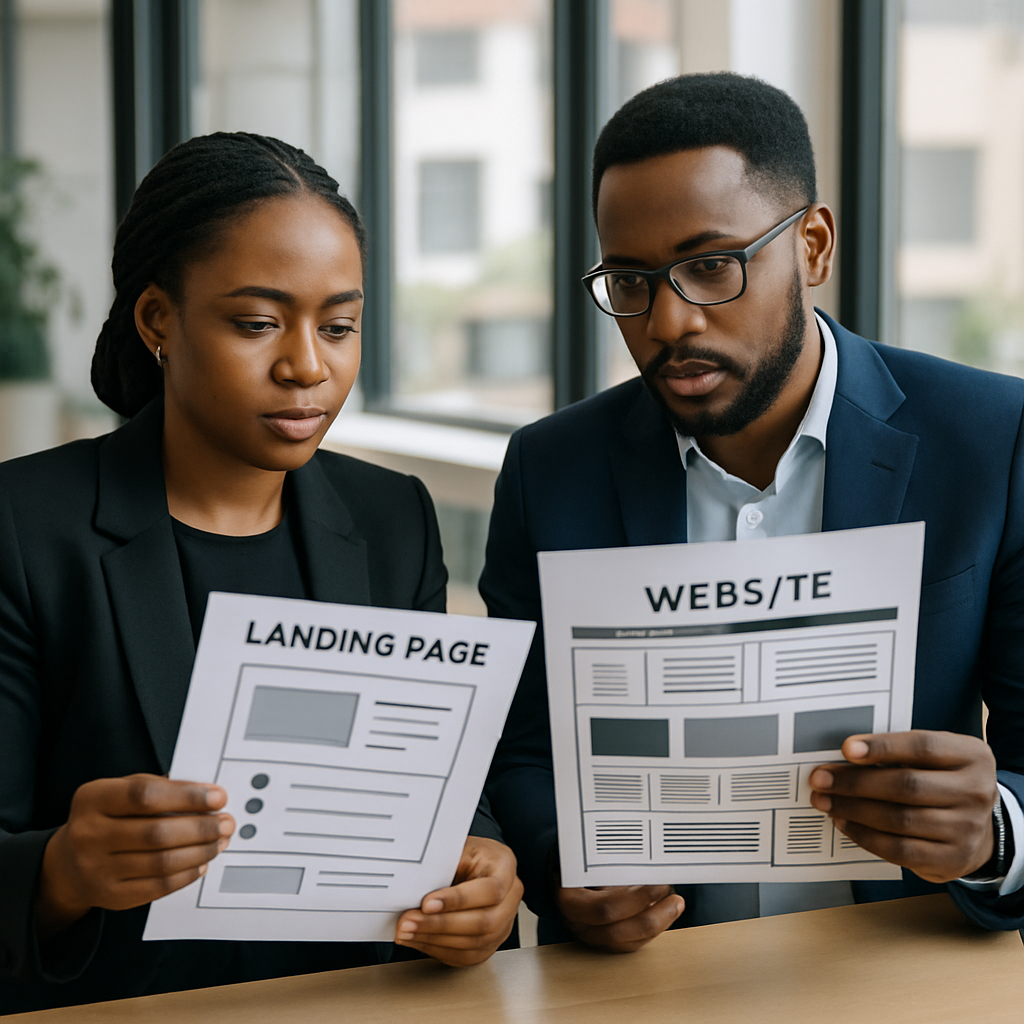
A landing page is a single, focused web page designed with one goal in mind—usually to capture leads or drive a specific action. Meanwhile, a full website consists of multiple pages: Home, About, Services, Blog, Contact, and more. The key difference in the landing page vs website debate lies in their structure, purpose, and cost.
For many Nigerian SMEs launching a new product or service, a landing page is the fastest and most affordable way to start. You can get a professionally designed landing page from a reputable agency like Albanny Technologies for as little as ₦80,000 to ₦150,000, depending on complexity and integrations. In contrast, a full website can cost anywhere from ₦250,000 to ₦1.2 million or more, depending on the features, design, and number of pages, as detailed in our web design price list for 2026.
Landing pages are perfect for targeted marketing campaigns—social ads, WhatsApp promotions, or new product launches. However, they often lack the depth and trust signals of a full website. A multi-page website builds credibility, attracts organic search traffic, and provides more information about your brand. Nigerian consumers are becoming more discerning; many will check your website before making a purchase or booking an appointment.
For example, a new Lagos-based beauty salon might start with a landing page promoting a grand opening discount. But as the business grows, it will need a full site to showcase services, customer testimonials, and an online booking system.
When to Choose a Landing Page—and When a Full Website Wins
The landing page vs website decision should always begin with your business goal. If your primary aim is to generate leads for a single product, book appointments, or collect sign-ups for an event, a landing page is often the best choice. Landing pages are laser-focused and convert visitors faster because there are fewer distractions.
For instance, if you’re running Facebook ads for a training workshop in Port Harcourt, a landing page with a simple registration form and persuasive copy can double your sign-up rate compared to sending prospects to a full website. Pro tip: Integrate a WhatsApp AI agent like Abby AI to instantly capture and qualify leads directly from your landing page—no human intervention needed.
However, as your business expands or you’re looking to establish authority and trust, a full website becomes essential. According to NBS data, over 55% of Nigerian internet users research a company online before making a purchasing decision. A well-structured website with service pages, an About Us section, and customer testimonials builds credibility and ranks better on Google. This is vital in sectors like consulting, hospitality, and tech, where trust is everything.
In addition, multi-page websites allow you to implement content marketing strategies, such as publishing industry news and tips on your tech news blog, which boosts SEO and keeps your audience engaged.
Real-World Scenarios: What Nigerian Businesses Are Actually Choosing in 2026
Let’s look at how real Nigerian businesses are deciding between a landing page and a full website—and the results they’re seeing.
First, consider a small Uyo-based real estate agency. Initially, they launched with a landing page to capture WhatsApp leads for a new estate. The conversion rate was high—over 10% of visitors left their details, especially when paired with an AI WhatsApp agent. However, as they expanded their portfolio, they moved to a full website. This allowed them to display property listings, share client testimonials, and even start a blog to attract organic Google traffic. Their website visitors doubled within three months, and the brand looked far more established.
Another example comes from an Abuja-based event planner. She started with a simple landing page for a Valentine’s Day event, collecting RSVPs via WhatsApp. The campaign was a success, but for her regular business, she needed a full website to showcase past events, share packages, and enable online inquiries year-round. Switching to a full website increased her monthly inquiries by 40%.
Similarly, many Nigerian SMEs in 2026 are turning to hybrid solutions. They use a full website as their digital hub, but also deploy targeted landing pages for each campaign. Albanny Technologies often recommends this approach in our web design projects, especially for businesses with multiple services or seasonal promotions.
Key Takeaways
The landing page vs website choice depends on your business goals, budget, and growth stage.
Landing pages are cost-effective for campaigns and quick lead generation, especially for new products or events.
Full websites build trust, support SEO, and showcase your brand’s full story—essential for long-term growth.
Nigerian SMEs often start with a landing page and upgrade to a website as their business expands.
Hybrid strategies—using both—can maximise results for businesses with diverse offerings.
Get the Right Website for Your Business Goals
Choosing between a landing page and a full website is one of the most important decisions for your SME’s growth. Albanny Technologies specialises in both, helping you achieve your goals faster. To see what’s possible, explore our website design services or request a custom quote tailored to your business and budget. Let’s help you stand out and win more customers in 2026.
Benson is a Senior Digital Strategist at Albanny Technologies with over 5 years of experience in high-end web development and technical SEO. Specializing in helping Nigerian businesses scale their digital footprint, he translates complex technology into actionable growth strategies. When he’s not auditing site performance, he’s mentoring the next generation of tech talent in West Africa