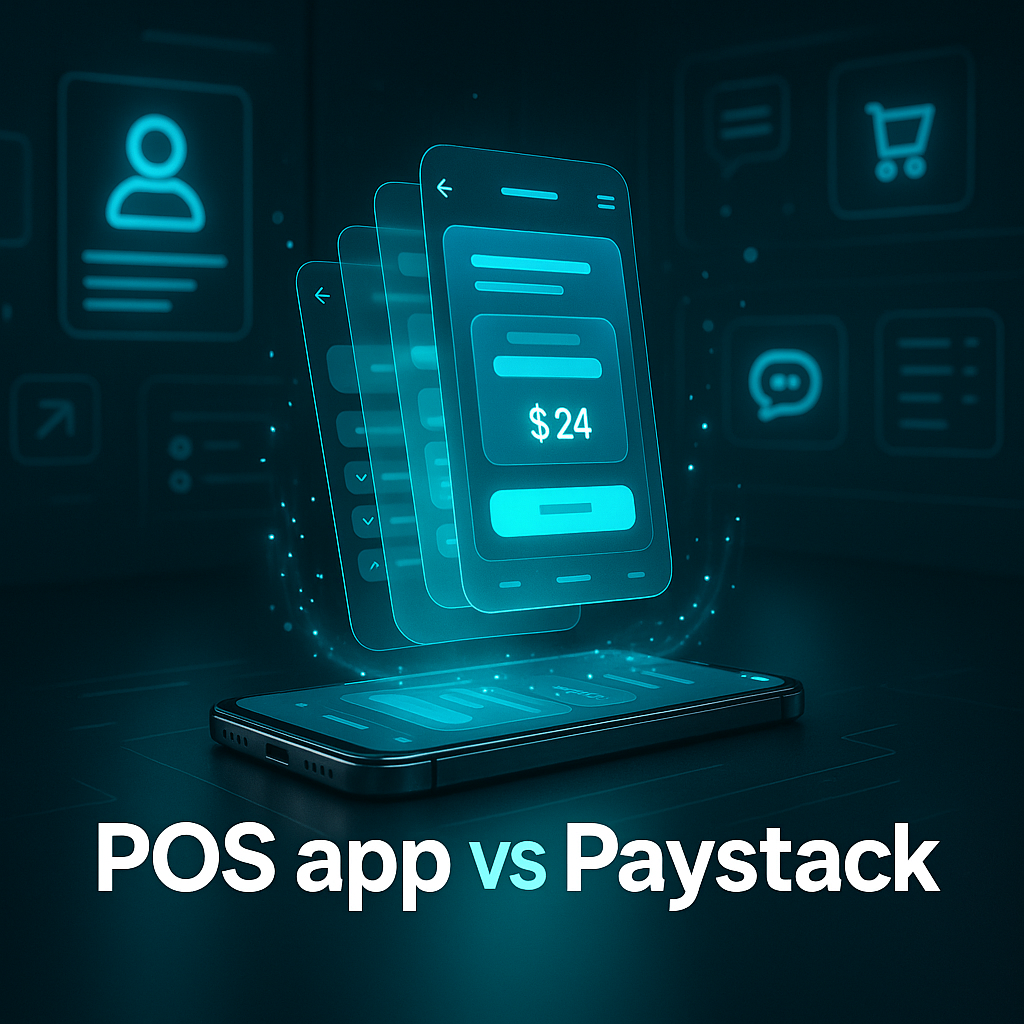
POS App vs. Paystack Integration: Which Streamlines Business Payments?6 min read
Every day, Nigerian business owners are faced with the challenge of collecting payments quickly, securely, and affordably. While cash is still king in many places, the surge in digital payments has made solutions like POS apps and Paystack integration essential for growth. At Albanny Technologies, we have seen firsthand how the right payment system can boost sales and simplify operations for businesses of all sizes. The question is: when it comes to POS app vs Paystack, which option truly streamlines your business payments?
In this article, you’ll discover the concrete pros, cons, and costs of POS apps versus Paystack integration. You’ll get local examples, real naira figures, and practical advice to help you make a smart, future-proof choice for your Nigerian business.
POS App vs Paystack: How Do They Work for Nigerian Businesses?
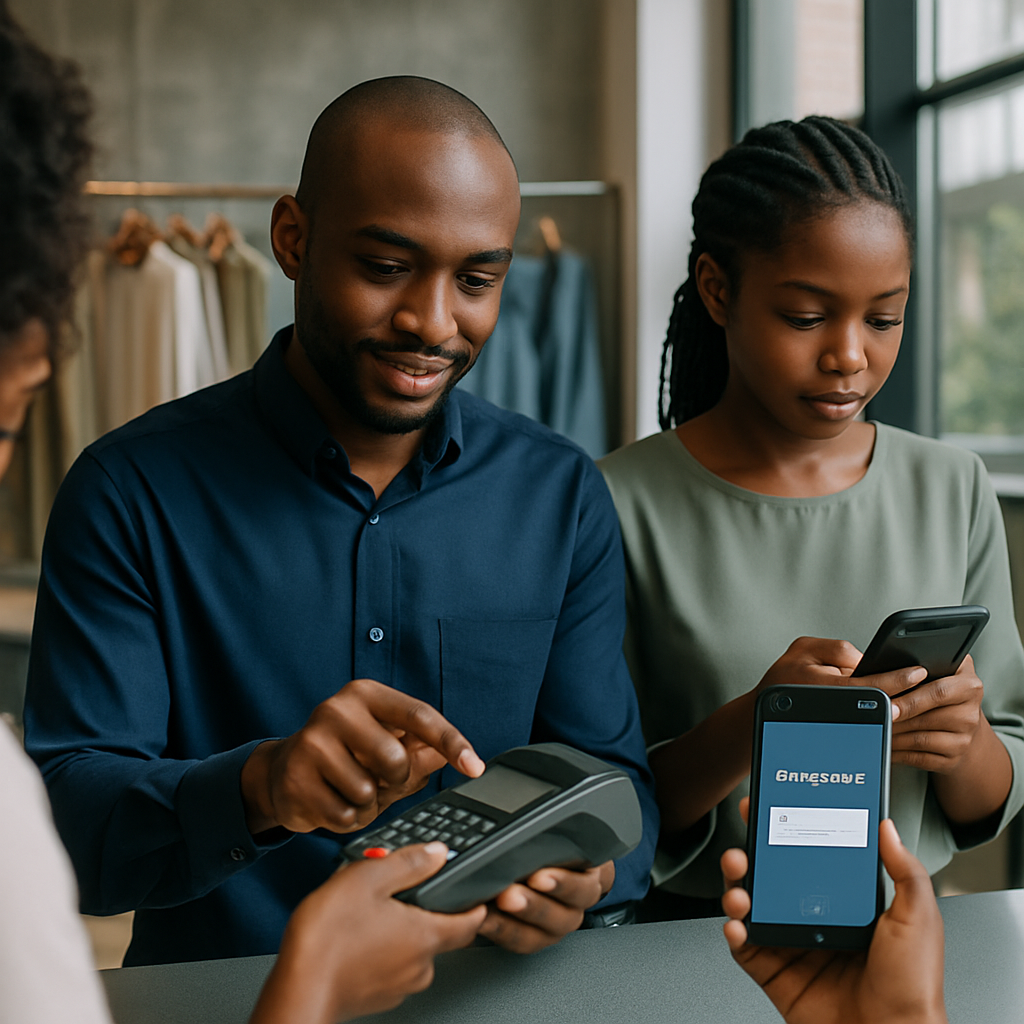
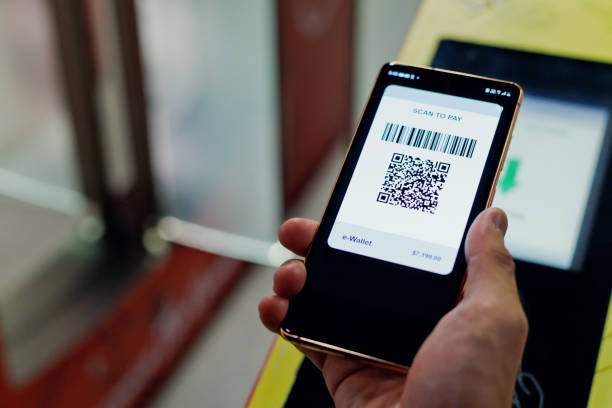
POS (Point of Sale) apps have become a familiar sight in supermarkets, pharmacies, boutiques, and even roadside shops. These handheld or tablet-based apps, typically paired with a POS terminal, allow you to accept card payments anywhere you do business. For example, a Lagos salon might use a POS app to process a N5,000 card payment for a client on the spot. You get instant confirmation, and the money usually lands in your business account within 24 hours.
On the other hand, Paystack is a payment gateway integration that allows you to collect payments online—via your website, mobile app, or even a custom WhatsApp flow. It supports cards, bank transfers, USSD, and more. For instance, an Abuja-based food delivery business might embed Paystack on its website, letting customers pay N3,500 for jollof rice and suya before checkout, all from their phone.
The main distinction is physical versus digital. POS apps shine in face-to-face, in-store settings, while Paystack integration opens you to online payments and remote transactions. Some businesses, like e-commerce stores or service providers, may never see their customers in person. For them, Paystack is indispensable. But if you have a storefront or sell at markets, a POS app is hard to beat for direct card payments.
For those seeking even more automation—like WhatsApp booking and payment flows—solutions such as Abby AI can combine the best of both worlds, handling leads, payments, and reminders seamlessly.
Comparing Costs and Fees: Which Is More Affordable?
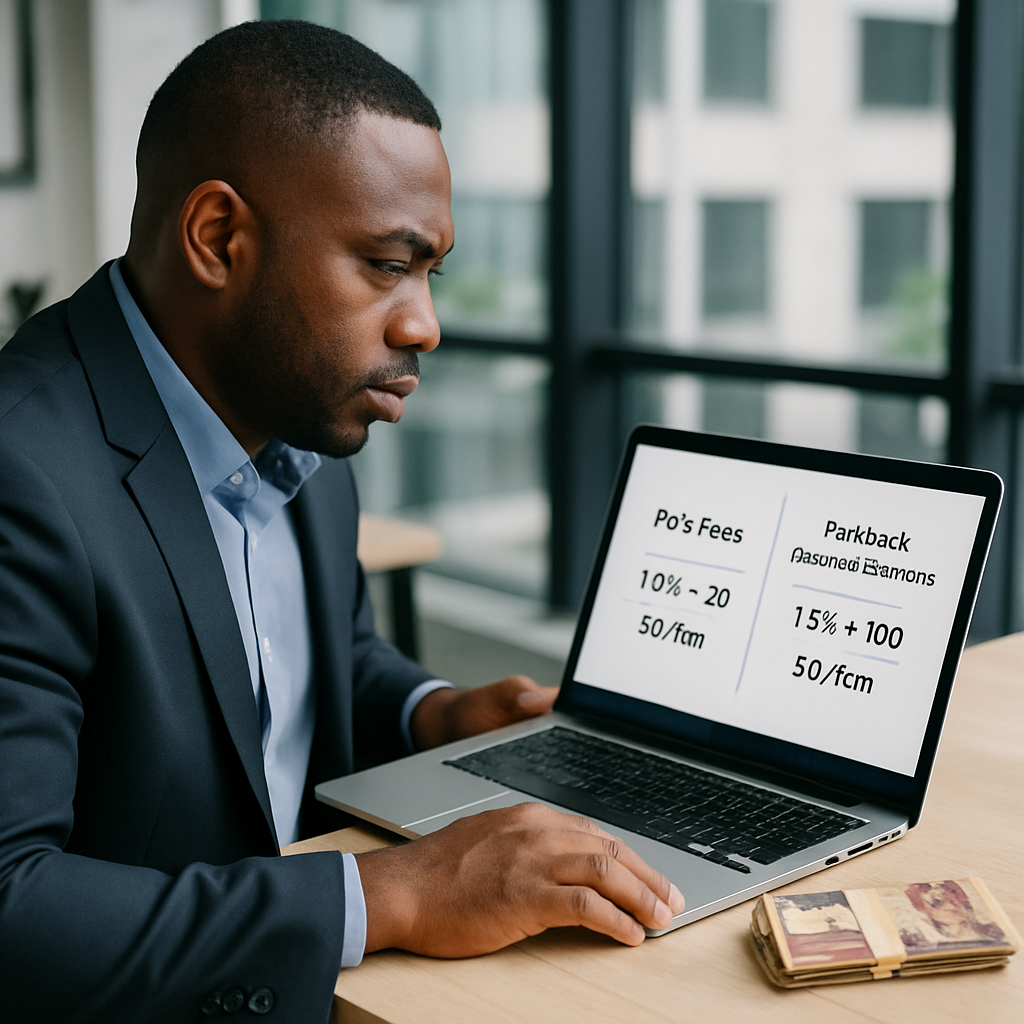
Costs can make or break your payment strategy. With POS apps, you typically pay for the POS terminal itself (ranging from N15,000 to N30,000 as a one-time fee) plus transaction charges. For example, leading Nigerian POS providers charge between 0.5% and 1.5% per transaction, sometimes with a fixed minimum (like N100 per withdrawal). Maintenance fees may also apply, especially for high-volume businesses.
Paystack, meanwhile, is free to set up, but its transaction fees hover around 1.5% + N100 for local cards (with the N100 waived for payments under N2,500). For international cards, the charge climbs to 3.9% + N100. No hardware is required, and you can start immediately if your business already has a website or mobile app.
Pro tip: If you’re running a shop where most transactions are above N2,500, Paystack could save you on flat fees. However, if you process many microtransactions, a POS app with lower per-transaction minimums may make more sense.
It’s also important to consider your customer base. According to a recent NBS report, digital payments (cards, transfers, USSD) are growing fastest in urban areas like Lagos and Abuja, but cash and POS remain dominant in smaller towns. Therefore, understanding your audience can help you avoid overpaying for a system your customers won’t use.
Finally, both systems settle payments within one or two business days. This is a major improvement over the old “come back for your change” routine that frustrates customers and hurts sales.
Streamlining Operations: Pros, Cons, and Real Nigerian Examples
Let’s break down the operational realities. POS apps are incredibly easy to use, even for staff with limited tech experience. Plug in the POS device, open the app, swipe the card, and you’re done. This simplicity is why POS apps are everywhere from Lagos Island to Oshogbo. They also work offline, storing transactions until the next internet connection is available.
However, POS apps are limited to in-person sales. They rarely integrate with websites, CRMs, or marketing automation tools. So, if you want to sell online or accept payments while you sleep, you’ll hit a wall.
Paystack integration, on the other hand, unlocks powerful automation. With a custom mobile app or website, you can accept payments 24/7, automate receipts, and connect with tools like WhatsApp or email for instant notifications. For example, a Port Harcourt-based online training company implemented Paystack to automate student enrolment and payment confirmation. This freed staff from manual reconciliation and improved customer satisfaction.
Of course, Paystack does require a bit more setup—usually involving a developer or a mobile app development company. For those without digital experience, this could be a hurdle. But once set up, the benefits are significant. As one Abuja entrepreneur put it: “With Paystack on my site, customers pay anytime and I see their orders instantly. My sales doubled in two months.”
In addition, businesses using both systems—POS for in-person and Paystack for online—report the highest payment completion rates. For example, a fashion retailer in Enugu added Paystack to its online store while keeping POS in the physical shop. This “hybrid” approach helped them reach a wider audience and reduce failed payments.
Meanwhile, if your business relies on booking appointments, complaint resolution, or lead capture through WhatsApp, integrating with Abby AI can automate much of the process, linking payment status to customer communications.
Key Takeaways
POS app vs Paystack is about offline, in-person sales versus online, automated payments.
POS apps require hardware and are best for physical shops, while Paystack works online, 24/7.
Paystack’s setup is free but charges higher for international cards; POS has one-time hardware costs plus transaction fees.
Combining both payment systems can maximise completion rates for Nigerian businesses.
Albanny Technologies can help you build the right solution—POS, Paystack, or a custom hybrid.
Integrate the Right Payment Solution With Albanny
Choosing between POS apps and Paystack integration depends on how and where you serve your customers. Albanny Technologies can help you design, develop, and integrate payment systems that fit your Nigerian business perfectly. Ready to streamline your payments? Explore our custom mobile app development services and take the next step towards seamless collections.
Benson is a Senior Digital Strategist at Albanny Technologies with over 5 years of experience in high-end web development and technical SEO. Specializing in helping Nigerian businesses scale their digital footprint, he translates complex technology into actionable growth strategies. When he’s not auditing site performance, he’s mentoring the next generation of tech talent in West Africa