Should Your Lagos Business Use a Website Builder or Developer?6 min read
In Lagos, a slow website or missed enquiry can cost a business a customer before the first conversation begins. If you are weighing website builder vs developer, the right choice depends on your budget, technical needs and plans for growth. A builder offers a quicker way to publish a basic site, while a developer can create a more tailored solution.
However, neither option suits every business. A fashion seller testing online demand may need something different from a clinic managing appointment requests or a school sharing information with parents. Albanny Technologies helps businesses assess their goals before choosing a web solution.
In this guide, you will learn how builders and developers differ, what each option may cost, and how to choose the right approach for your Lagos business.
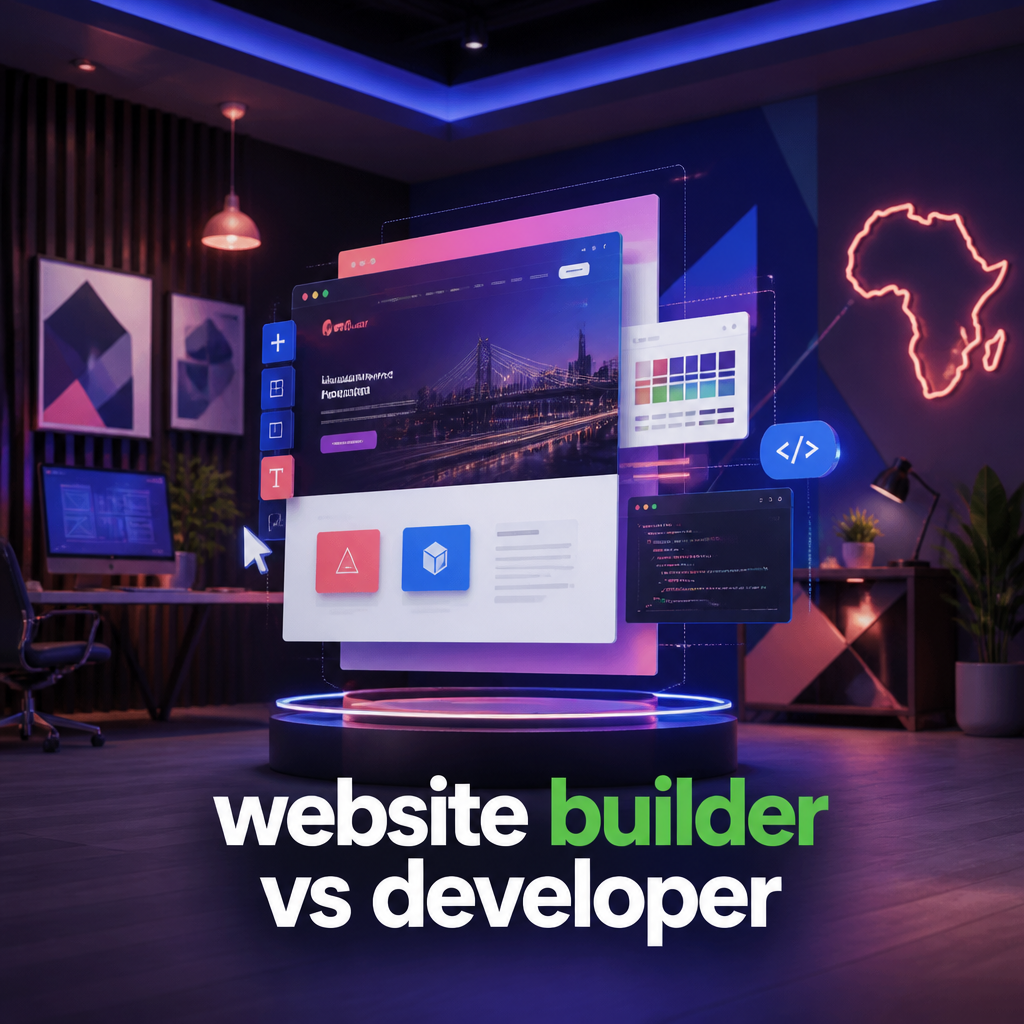
Website builder vs developer: what is the difference?
A website builder is a platform that lets you assemble pages using templates and visual controls. You can add text, images, contact forms and other features without writing much code. As a result, a business owner can often publish a simple website independently.
A developer builds or adapts a website using code and technical tools. Depending on the project, they can create custom layouts, connect business systems, and tailor features to how your team works. In addition, a developer can help diagnose technical problems when the site behaves unexpectedly.
For example, a Lagos caterer might use a builder to display menus, service areas and a phone number. Meanwhile, a property company that needs searchable listings, enquiry tracking and staff logins may need a developer’s help.
However, the difference is not simply “cheap versus expensive.” Builders require your time for setup, updates and troubleshooting. Developers require a larger initial investment, but they can handle complex requirements and reduce the need for workarounds.
Before choosing, list the tasks your website must perform. Will customers only read about your services? Do they need to book, pay, compare products or create accounts? In short, your website’s job should guide the decision.
When a website builder makes sense for a Lagos business
A builder can work well when your main goal is to establish an online presence quickly. For instance, a new salon may need opening hours, service descriptions, a location map and a WhatsApp contact button. A builder can bring those essentials together without commissioning a large custom project.
Similarly, a consultant or small restaurant can use a template to publish a few pages and test whether online enquiries increase. This approach may suit a business with a tight budget, a straightforward service list and someone available to update the site.
However, check the total cost before you commit. Some platforms charge ongoing subscription fees for hosting, premium templates or useful functions. You may also need to pay separately for a domain, business email, payment tools or professional images. Therefore, compare the full annual cost with a professionally built site’s setup and maintenance costs.
Also, consider who controls the website and its content. Some builders make it difficult to move your design or data to another platform. Before signing up, read the terms and check how you can export your pages, customer records and product information.
For business owners comparing estimates, Albanny Technologies’ web design price list for 2026 can help clarify which project features affect the budget. In addition, check whether an estimate includes mobile layouts, contact forms, training and ongoing support.
Your customers’ connection quality matters too. A site should load clearly on mobile phones and avoid oversized images or unnecessary effects. The Nigerian Communications Commission provides official telecom information that can help businesses understand the country’s communications environment. However, test your own pages on mobile data rather than assuming every visitor has fast Wi-Fi.
Pro tip: Start with the smallest site that can support your actual sales process. Then, add features when customer behaviour or staff workload shows a clear need.
When to hire a developer instead
A developer becomes valuable when your website needs to do more than present information. For example, an online retailer may need product filters, stock updates, payment integration and delivery choices. A clinic may need appointment requests that connect to its internal booking process.
In those cases, a template may not fit how the business operates. A developer can plan the right structure, connect suitable tools and build features around real staff workflows. As a result, the website may reduce manual tasks instead of adding another system to manage.
However, custom development is not automatically the best choice. It can require more planning, testing and investment. You also need to agree on maintenance, security updates, backups and who will make changes after launch. Therefore, ask for a written scope and ownership details before work begins.
Ask a potential developer how they will make the site mobile-friendly, how you will edit everyday content, and what happens if a feature fails. In addition, request examples of similar projects. Albanny Technologies’ web design portfolio can help you assess the kind of work a web team has delivered.
A practical rule is to hire a developer when your business process requires custom functionality, integrations or room to scale. For simpler needs, a builder may be enough. “Choose the simplest platform that can support your next stage of growth,” advises Albanny Technologies.
Finally, make sure you can access your domain, hosting account, website files and administrator logins. Our guide to website ownership for Nigerian businesses explains why control matters. That access protects your business if you later change providers or bring updates in-house.
Key Takeaways
A builder suits simple websites and businesses that can manage updates themselves.
A developer can create custom features and connect business systems.
Compare ongoing fees, setup costs and maintenance before deciding.
Test the site on mobile data and check how quickly pages load.
Confirm ownership, access, backups and support arrangements in writing.
Work With Albanny Technologies
The right choice depends on what your website needs to do today and how your business plans to grow. Albanny Technologies can help you assess your options and plan a practical solution through our web design services in Nigeria.
Benson is a Senior Digital Strategist at Albanny Technologies with over 5 years of experience in high-end web development and technical SEO. Specializing in helping Nigerian businesses scale their digital footprint, he translates complex technology into actionable growth strategies. When he’s not auditing site performance, he’s mentoring the next generation of tech talent in West Africa