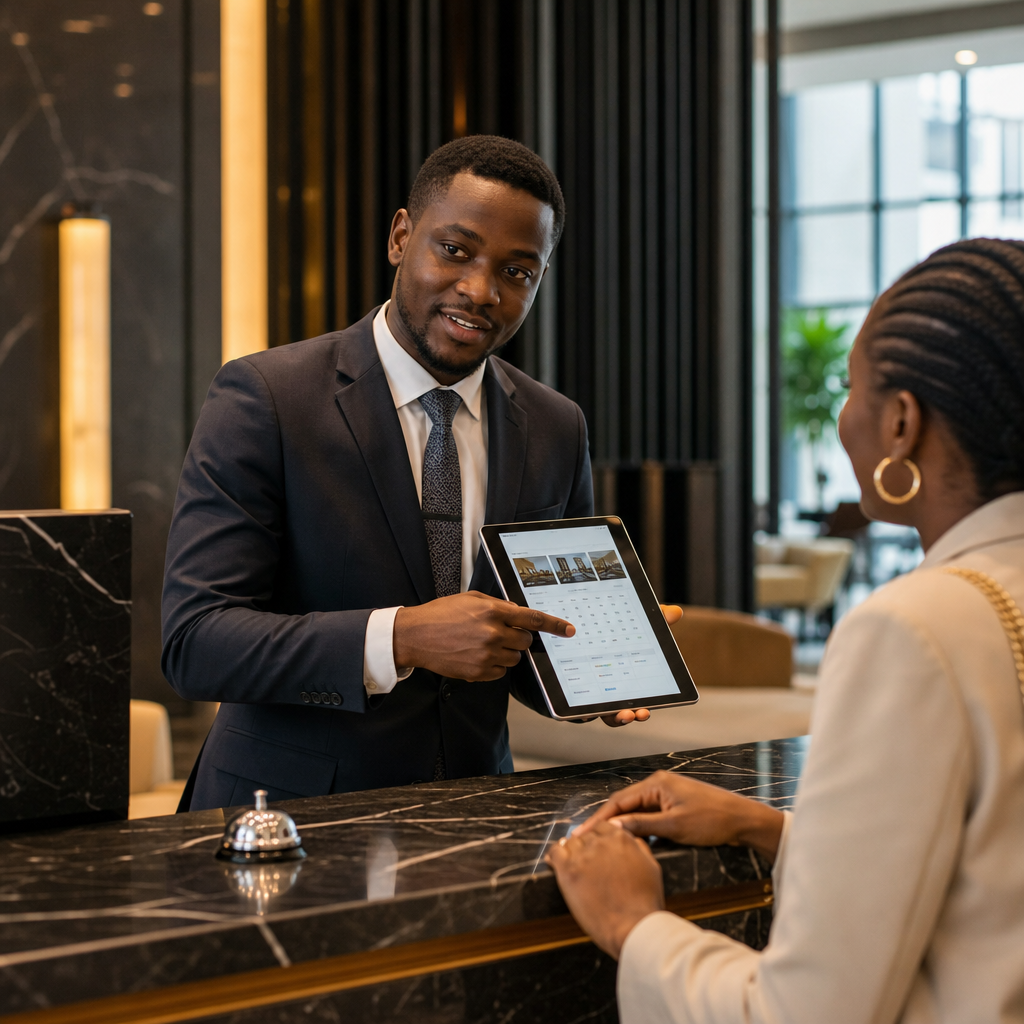
A Hotel Website That Turns Room Searches Into Reservations6 min read
When a guest in Lagos searches for a hotel, a slow page or unclear room price can send that booking to a competitor. Good hotel website design Nigeria helps guests compare rooms, understand costs and reserve directly, whether they browse from a phone in Abuja or a laptop overseas.
A hotel website should do more than display attractive photos. It must answer practical questions about availability, payment, location, check-in and amenities. It should also make it easy to contact the hotel when a guest needs help. Albanny Technologies helps Nigerian businesses create websites that support clear customer journeys and real enquiries.
In this guide, you will learn which booking details to publish, how to build useful room pages, and how to make mobile booking and enquiries easier for guests.
Hotel website design Nigeria: Make booking details clear
Guests need enough information to decide without calling reception for every detail. Therefore, put the core booking information where visitors can find it quickly: on the homepage, room pages and booking form.
Show the hotel’s location, contact details, room categories, nightly rates and availability. Explain whether the quoted amount includes breakfast, taxes or other charges. When rates change by date or season, display the relevant dates and let guests check their travel period before they enquire.
Likewise, explain check-in and check-out times, cancellation terms, deposit requirements and accepted payment methods. A guest should know whether the hotel accepts card payments, bank transfers or payment on arrival. If you require a deposit, state the amount or percentage and explain how the guest can confirm payment.
Nigerian guests may also want practical details that influence their stay. For example, describe parking, generator or inverter backup, Wi-Fi, airport transfers and nearby landmarks. A hotel in Ikeja can mention its distance from the airport. A guesthouse in Enugu might highlight access to a business district or event centre.
Use naira prices wherever possible. If you accept foreign currency, explain the payment process rather than leaving guests to guess the final amount. In addition, keep pricing and availability current. An outdated rate can create distrust and force staff to resolve avoidable misunderstandings.
A strong website plan brings these details together with a clear layout. Albanny Technologies explains the planning choices in its guide to affordable web design in Lagos for small businesses. The same principle applies to hotels: prioritise the information guests need before they book.
Build room pages that help guests choose
Each room type deserves its own useful page or clearly separated section. Do not make guests rely on one generic description for standard rooms, suites and family rooms. Instead, show what differs and who each option suits.
Start with the room name, occupancy limit, bed configuration and size where available. Then describe the features that affect a guest’s choice, such as air conditioning, workspace, balcony, kitchenette or accessible facilities. Be specific. “Comfortable room” tells visitors little, while “king bed, work desk and city view” sets a clearer expectation.
Photos also matter. Use bright, accurate images of the actual room, bathroom and shared facilities. Include captions when they clarify what the photo shows. However, avoid images that misrepresent the room or hide important details. Guests who arrive to find a different setup may leave disappointed reviews.
Next, add the price, availability prompt and a visible “Book this room” button. Keep the button close to the room information, rather than making visitors scroll back to the top. If prices vary, let guests enter dates to see the rate for their stay.
Offer comparison without overwhelming the page. A simple table can show occupancy, bed type, breakfast inclusion and key amenities across room categories. In contrast, long blocks of promotional language make comparisons harder.
“Guests should be able to understand the room and the next step without asking the front desk to translate the website,” says Albanny Technologies’ web strategy team. That is why each room page should answer likely questions and lead naturally to booking.
A well-designed site can also support follow-up enquiries outside reception hours. For example, Abby AI, Albanny Technologies’ WhatsApp AI agent can capture leads and respond to common questions. A hotel can use an enquiry path like this when a guest needs clarification before making a reservation.
Make mobile reservations and enquiries effortless
Many guests discover hotels on their phones, so mobile usability directly affects reservations. A page that looks polished on a desktop can still frustrate visitors if buttons are tiny, forms are crowded or photos take too long to load. Test the full booking journey on common phone screen sizes.
Keep the main action easy to spot. Use clear buttons such as “Check availability,” “Book now” or “Ask on WhatsApp.” Place them near room rates and repeat them where useful. However, do not crowd every screen with competing actions. Give guests one obvious next step.
Booking forms should request only necessary information at first. Ask for dates, room choice, guest count, name and contact details. Then confirm what happens next, such as an instant confirmation or a call from reservations. If staff must confirm availability manually, say so and provide a realistic response window.
Offer a direct enquiry option for guests who cannot complete a booking online. A WhatsApp link can help someone ask about late arrival or airport pickup. Meanwhile, a visible phone number supports travellers who prefer to speak with staff. Keep contact details consistent across the site.
Payment steps need equal care. Explain whether guests pay a deposit online, receive bank details by email or pay at the property. Use trusted payment providers and show what confirmation the guest should expect. Above all, never leave a guest unsure whether a reservation succeeded.
For reliable performance, compress images and limit unnecessary animations. Also check that the site loads on mobile data, not only on fast office Wi-Fi. The Nigerian Communications Commission provides information about the country’s communications sector, while hotels should test their own pages on the networks their guests use.
Finally, review the site regularly. Update seasonal rates, remove unavailable offers and test booking buttons after website changes. Albanny Technologies’ mobile-friendly website checks offer useful points to consider when evaluating a small-screen experience.
Key Takeaways
Show room prices, availability and extra charges clearly.
Explain payment, cancellation and check-in policies before guests reserve.
Give every room category useful details and accurate photographs.
Make booking buttons, phone numbers and WhatsApp enquiries easy to find.
Test the complete reservation journey on mobile devices and mobile data.
Build a Hotel Website That Makes Booking Easier
A hotel website should help guests move from room search to a confident reservation, while reducing repetitive questions for staff. Albanny Technologies can help you plan a clearer booking journey; schedule a free consultation with a web design expert to discuss your hotel’s needs.
Benson is a Senior Digital Strategist at Albanny Technologies with over 5 years of experience in high-end web development and technical SEO. Specializing in helping Nigerian businesses scale their digital footprint, he translates complex technology into actionable growth strategies. When he’s not auditing site performance, he’s mentoring the next generation of tech talent in West Africa